Living Rivers in art and conversation
A river-themed exhibition in Melbourne and a big round up of activities and recommendations.

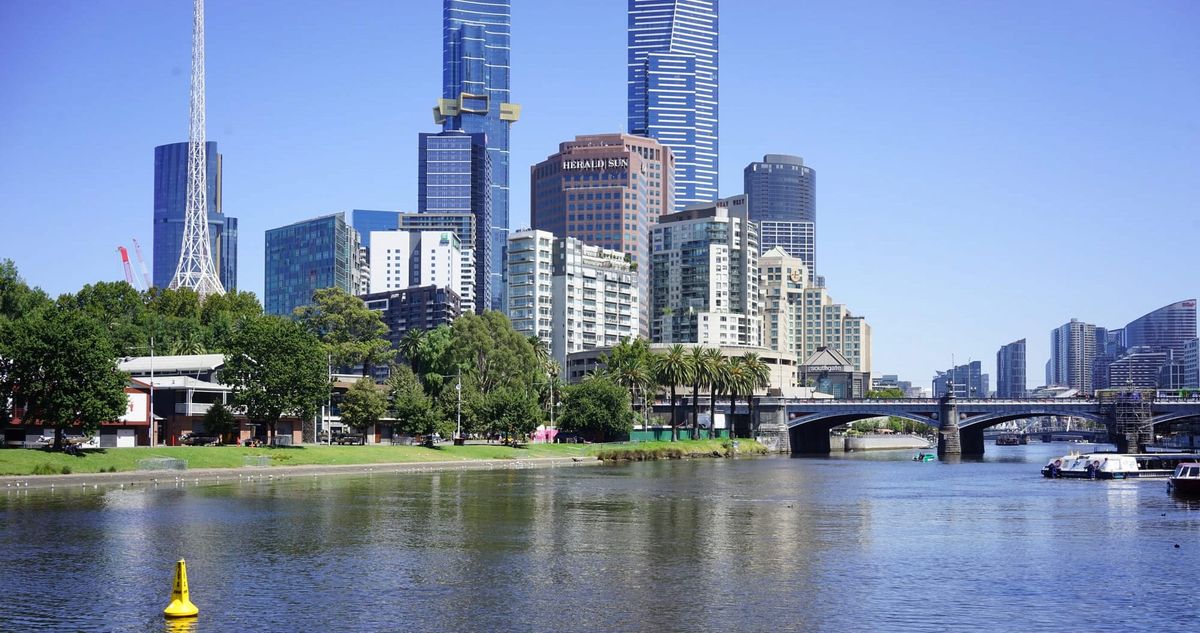
Controlling water access, flow and spread across wetlands and floodplains does not often get a chapter in histories of nations and cities, but the lives of rivers shape and are shaped by both the city and the nation who settles it. In the case of Birrarung (more commonly known as the Yarra) Melbourne's history is impossible to tell without detailing what has been done to this river by colonisers. I visited an exhibition intended to get the viewer to think differently about the European presence in Melbourne.
The city was built on Wurundjeri Woi-wurrung Country, as readers will know and is often called Narrm in recognition of this. Birrarung is also more frequently losing her colonial name Yarra and has picked up feminine pronouns on the advice of Wurundjeri Elders whose country stretches almost the length of the river and for whom the river is their mother.
Occupation studies: ngayanhurra bayarral Birrarung (they tried to tame Birrarung) was on display from 21 March – 13 September 2026 at the Koorie Heritage Trust. I visited on a quiet weekday afternoon in July and have been thinking about the exhibition since, located as it was mere meters from Birrarung herself.
Tahlia Palmer and Jasper Cohen-Hunter are two First Nations artists interested in the impact of the past on their own lives and the lives of Indigenous people. Palmer’s heritage is Yuwaalaraay/Gamilaraay and she hails from Whudjuk Noonga Boodjar (or Perth, Western Australia). Cohen-Hunter is a Wurundjeri Woi-wurrung man and this work is about advancing the struggle for Wurundjeri Sovereignty. The exhibition weaves together more than just these themes, but it is the interplay between the history of place and the rights of the river, and the rights of First Nations people, that stands out to me.
I enter a darkened exhibition space to see three video projections on the walls. I can hear a voiceover recounting both colonial and Wurundjeri history as images of Birrarung are layered over each other in the reassembled videos. A quite didactic approach of speaking directly to place is produced through field recordings from above and below the river’s surface, as well as distorted audio of a song from 1879 called Yarra Songs Waltzes. The artists regard this as a romantic European composition representing the colonial desire to impose picturesque order. I’m not familiar with the original but when the composer, Rudolf Bial visited Melbourne in 1857, I imagine he saw a city less than 25 year’s old, shaping the river and her surrounds into something distinctly European looking.
The sounds are layered and the images I’m watching are layered. Palmer and Cohen-Hunter regard this audiovisual palimpsest as a gesture of resistance. In their attempt to weave together threads both new and unexpected for an audience who might include a significant proportion of tourists making their way into the space from Narrm’s iconic Federation Square they’ve chosen to mirror the troubled and ambivalent condition of the river. The layered images in the videos move between familiar industrial sites to less familiar, perhaps re-vegetated wetlands, along the river’s inner city reach. While her course has been altered by successive city plans and economic priorities, the viewer is left disoriented and deliberately submerged.
Yet, there is something else going on here too. The artists have chosen to include archival documentation which makes explicit the history of altering the river. In a small room behind the videos plans, photographs and letters from surveyors are reproduced with permission from the Public Records Office of Victoria – the place historians go to read the primary sources describing Melbourne’s establishment and the repository for all public records generated by government today.
Similarly didactic, these records illustrate how colonisation unfolded on Birrarung and her lands. If, like me, you appreciate source material (and the effort required to navigate the archive in order to retrieve it) then you’ll enjoy the educational aesthetic this small room offers. I also appreciated the way this exhibition navigated the line between assigning blame and acknowledging the past. Koorie Heritage Trust is an Aboriginal institution, visitors can expect a First Nations perspective when they enter, and this is part of its significant contribution to Melbourne’s cultural landscape. The historical records on show are deliberately hidden, while also being the most colonial and conventional material in occupation studies. Many visitors missed this part of the exhibition while I was sat watching the videos.
Including archival material is a reminder that while many histories centre these records as reliable and tangible accounts of the past, they are just one component and must be interrogated. They’re also quite mute when displayed like specimens on a wall without all the contextual hubbub to unpack their origins.
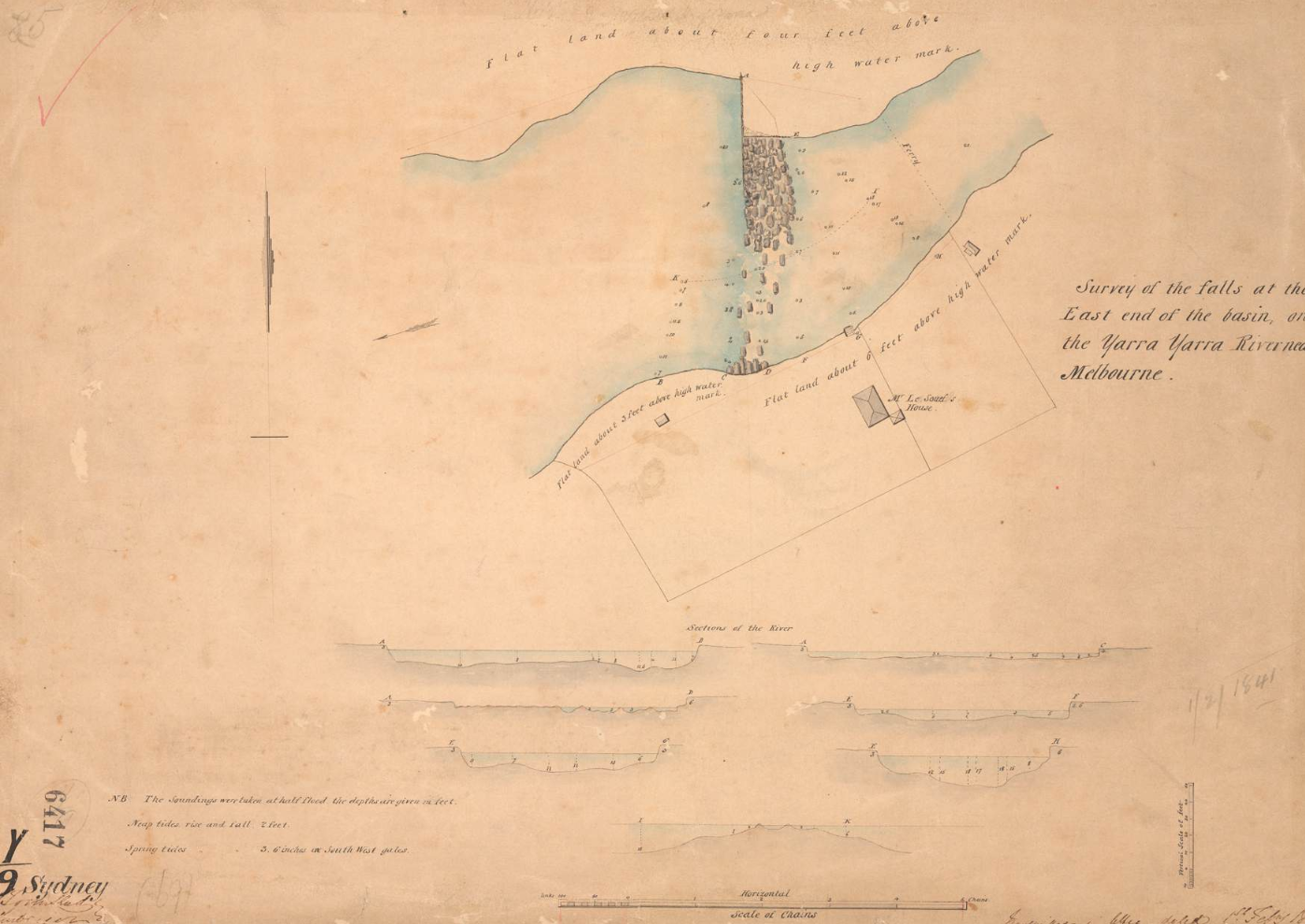
For example, in 1841 the Surveyor General’s Department, Port Phillip Branch, produced a plan (VPRS 8168/P0002, SYDNEY9, YARRA YARRA RIVER, TOWNSEND). The innocuous title belies one of the most significant sites along Birrarung. The Yarra falls, as it’s more commonly known, are the point at which the salt water and fresh water of Birrarung met and the rocks dividing them were a bridge across which countless generations of Wurundjeri and members of all the Kulin nations crossed when they were meeting for ceremony.
While none of the data on the yellowing paper conveys the significance of the place, the videos in the adjoining room inform the perceptive listener that this spot was blown apart in 1883. Apparently Birrarung’s natural flooding mechanisms were getting in the way of settlement.
Settle down!
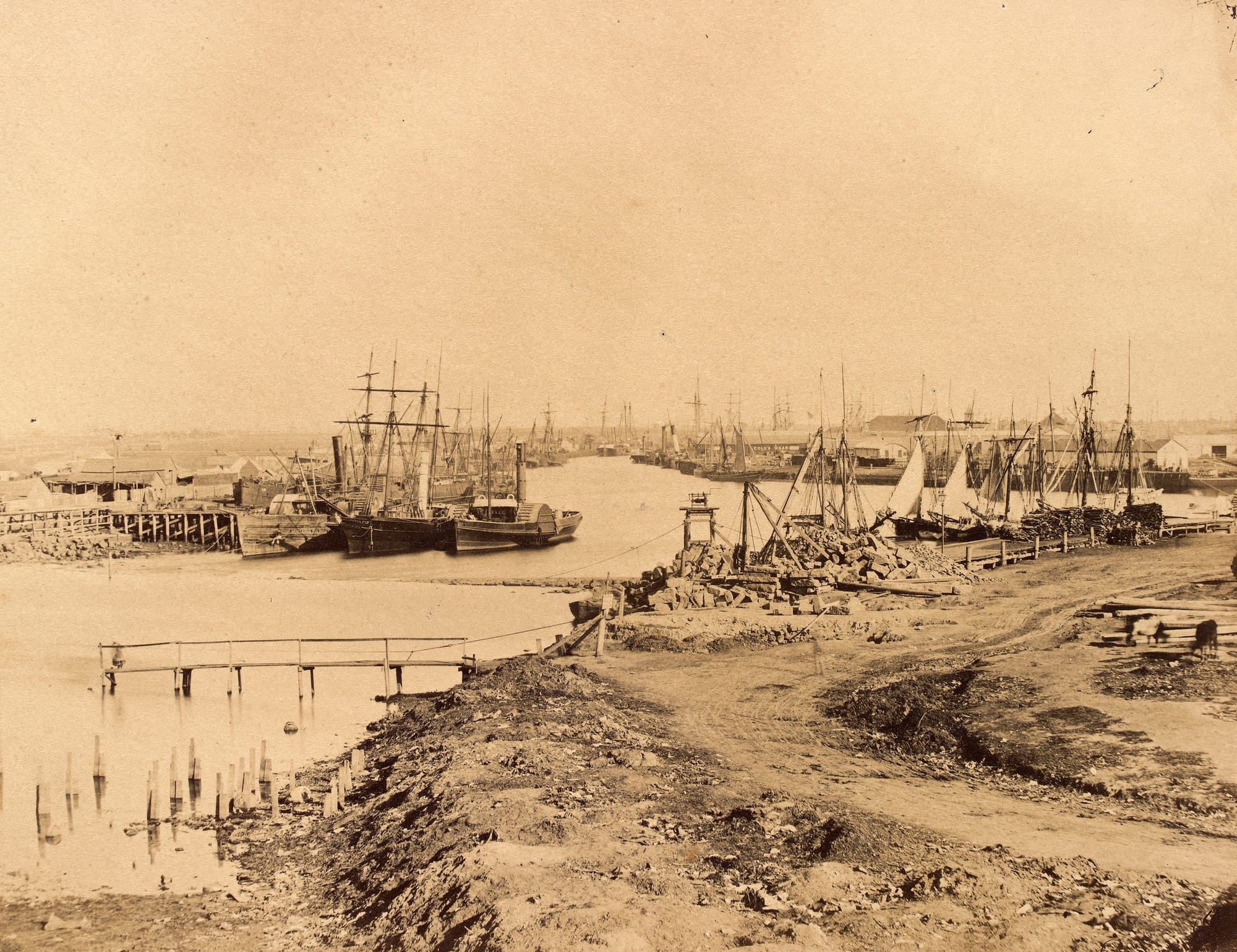
Knowing this and looking again at the map reproduction it is possible to understand some of the context and why the artists chose this record to pin on the wall alongside others with similarly devastating connotations.
Perhaps they’re only didactic if you know the history or are willing to do some mental labour to put the events together. You might look at the maps and see the absolute lack of First Nations rights (how could they just dynamite an ancient and significant site? hmmmm) and you might reflect on where Aboriginal and Torres Strait Islander rights are acknowledged: in the Yarra River Protection (Wilip-gin Birrarung Murron) Act from 2017 which recognises Birrarung as a living entity and created the Birrarung Council to act as her voice. Or during the Yoorook Justice Commission. Or in the Treaty between Victorian Traditional Owners and the state signed in December 2025. Monumental shifts compared to the mindsets of the past, but blowing up ancient rock formations is still commonplace in this country.
Occupation studies was another addition to an ongoing conversation happening about Birrarung's future, and the latest in a sequence of river-related exhibitions which I have reviewed previously. The exhibition drew together two knowledge systems, one recognising the river as a living entity (the only one in Australia recognised in this way) and the other detailing the transformation of Birrarung and her lands from the 1800s under colonisation. A First Nations perspective allows us to witness the truth telling that we will see more of with Treaty, and for this reason I found it a hugely rewarding experience.
Post script
A longer post script this time because it has been a while since I've been in a position to send a newsletter.
A recent publication
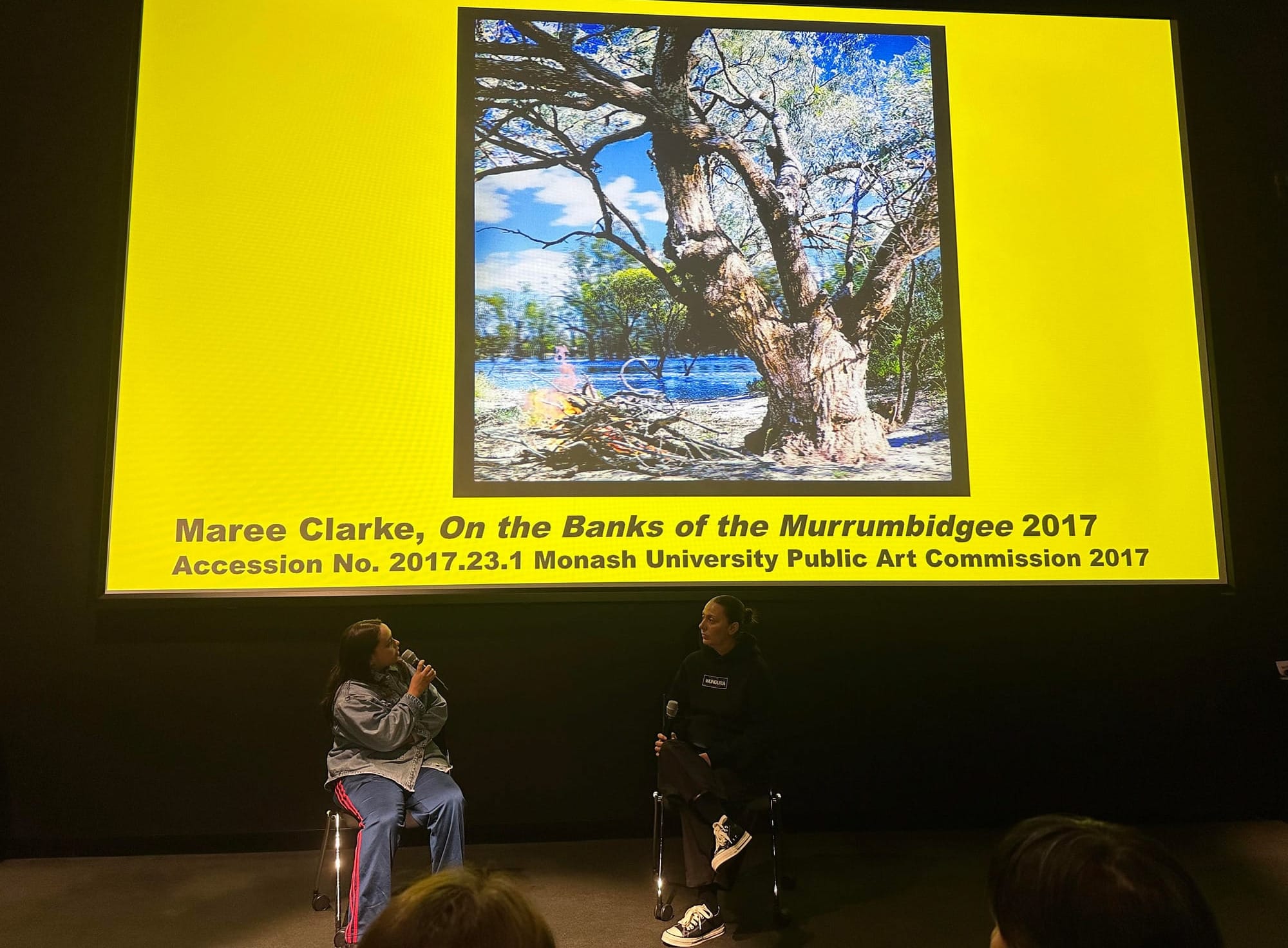
Earlier this month I had the opportunity to participate in Monash University Art Museum's innovative public programming for the launch of their 50th anniversary book. I wrote about Barkindji artist Kent Morris for 50 Years/50 Works: A MUMA Collection Index and on the day we joined a stella line up of artists, writers and curators for a rapid-fire series of 5 minute interviews.
At once thrilling and intimidating these interviews forced both speakers to get to the point and leave their audience with something juicy. No time to think, just juicy art discussion.
You can purchase 50 Years/50 Works: A MUMA Collection Index on the MUMA website. It contains experimental and exciting pairings of artwork with writer/curator/arts worker capturing a kaleidoscopic view of the collection.
Don Watson on Trump
Another exciting public programming venture I've contributed to recently is a series of talks unfolding in Mildura. An initiative of Creative Sunraysia, a new organisation dedicated to growing the arts and creative impulse in the region. Talking Big Sunraysia is bringing together local and national speakers on prescient topics. We're keen to get debate flowing without shying away from difficult topics.
Don Watson speaking on Trump on 16 September was a great way to kick off the series. For the historians in the room (just me?) situating of Trump's politics and particular approach within both short and longer timelines of the nation's history, while pivoting around the Star Spangled Banner (and Whitney Houston's 1991 super bowl performance) was just riveting.
The next talk in the series tackles water and the questions around ownership, trading, the rights of nature, and First Nations people through a focus on the Murray River system.
Recommendations
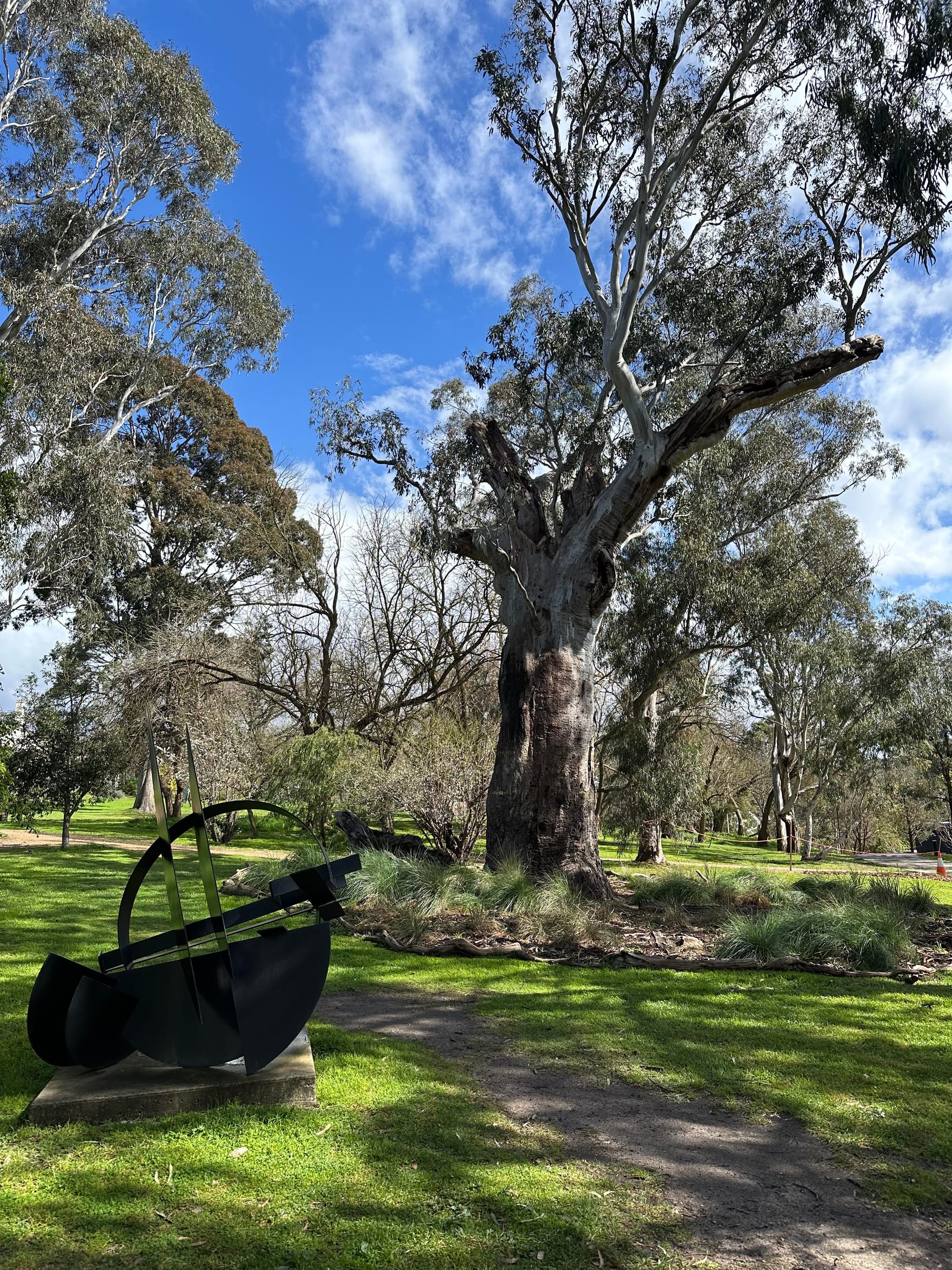
If you're in Melbourne, and I know many of you are reading this from Kulin Country, can I recommend visiting the Watch These Hands exhibition before 25 October?
I had the privilege of helping to install some of the artworks for the show in July and I witnessed not just the hard work of curator Eugene Howard, but the absolute generosity with which he brought this exhibition to life. He has empowered many First Nations artists for this show, and for Heide it will be the first time Wurundjeri artists have exhibited on this corner of their Country.
Each artist in the exhibition is deeply committed to practices of custodianship and caring for Country and their work reflects a diverse range of approaches, each one lighting up the unique Heide Modern exhibition space.
Slow looking in practice
The Public Galleries Association of Victoria and ArtsHub are collaborating on an Analog Art Club. I think these initiatives are wonderful and as soon as I heard about this I knew I'd share it here. The phone-free gallery programs are happening across several galleries in Melbourne ad regional Victoria, including Mildura!
I attended a slow art day event at the Mildura Arts Centre earlier this year and found it hugely grounding. You might be thinking, but Nikita you write almost exclusively about looking slowly at art, surely phone free time is second nature to you? Yes, even I enjoy the reminder to slow down, I love being guided through a space to see the works in new ways.
Let me know if you visit one of the participating galleries and what you thought of the experience. You can reply to this email.